
Want Your Team to Use AI Safely? Grab a FREE Copy of Our...
Ready-to-Use AI Acceptable Use Policy
for Your Business
Want Your Team to Use AI Safely? Grab a FREE Copy of Our...
Ready-to-Use AI Acceptable Use Policy
for Your Business
Use this comprehensive policy template to set clear rules around:
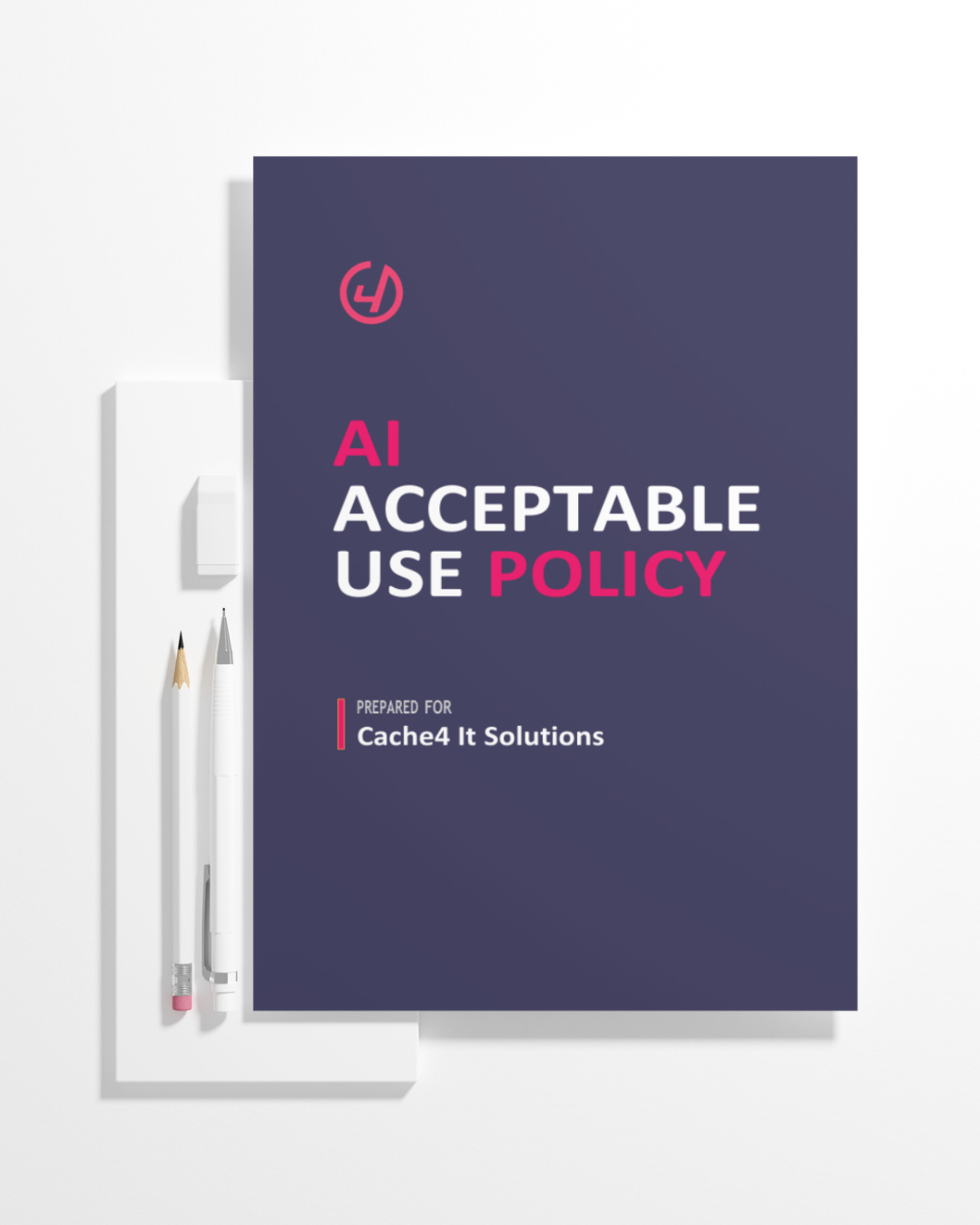
Use this comprehensive policy template to set clear rules around:
Which AI tools they are—and aren’t—approved to use
Using AI meeting recorders, browser extensions, automations and personal devices
Checking AI-generated facts, calculations, code and business decisions before relying on them
Protecting client agreements, employee privacy, company data, copyright and intellectual property
Handling AI-generated content, deepfakes, suspicious payment requests and other emerging risks
Employee training, contractor responsibilities and reporting mistakes or possible data leaks quickly
And a whole lot more!
Just add your branding, approved AI tools and internal contact details, and it’s ready to introduce to your team...
You’ll get instant access to the editable AI Acceptable Use Policy template.
You’ll get instant access to the editable AI Acceptable Use Policy template.
What You'll Find Inside
What You'll Find Inside
Clear Rules on Which AI Tools Can Be Used
The policy covers web-based tools, browser extensions, built-in AI features and automated meeting recorders.
It includes space to list your approved AI software, alongside a clear process employees can follow if they want to request a new tool.
A Simple System for Protecting Business Data
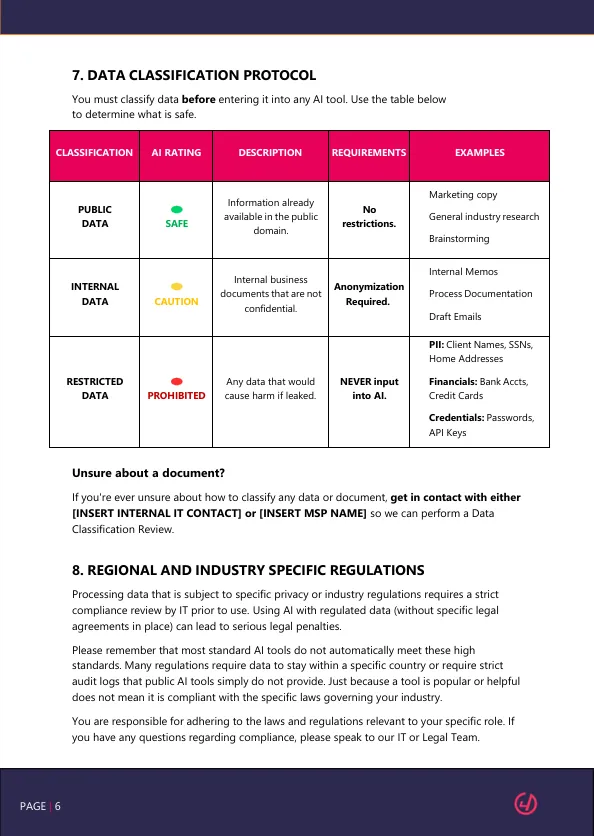
The policy gives employees a practical way to check information before entering it into an AI tool.
Its data-classification table separates public, internal and restricted information, with clear examples of what is safe, what must be anonymised and what must never be shared.
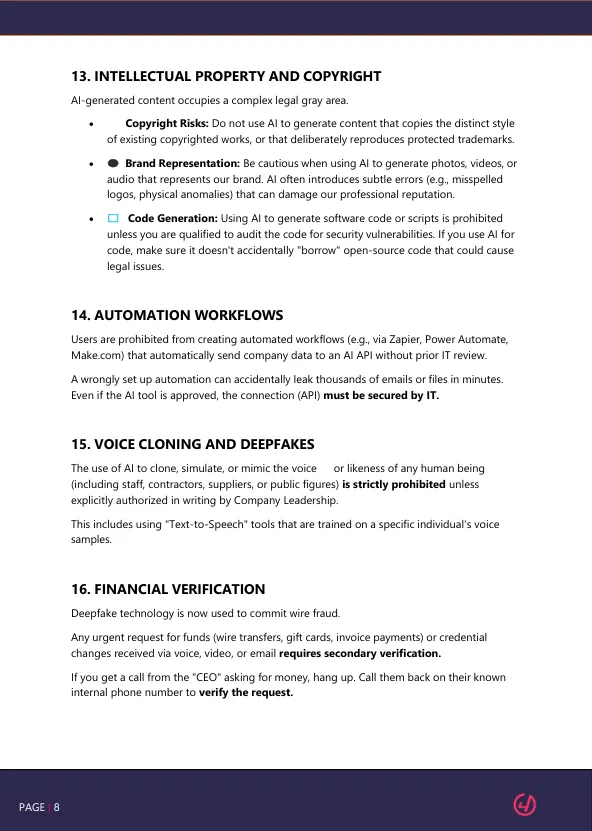
Protection Against Emerging AI Risks
The policy addresses copyright, insecure automations, voice cloning, deepfakes and fraudulent financial requests.
It sets boundaries around AI-generated content and automated workflows, while requiring additional verification for unexpected requests involving payments or account details.
A Clear Process When Something Goes Wrong
The policy tells employees what to do if restricted information is accidentally shared or an unauthorised AI tool is used.
It also covers incident reporting, attempts to bypass AI security, policy reviews and employee acknowledgement so everyone understands the rules and their responsibilities.